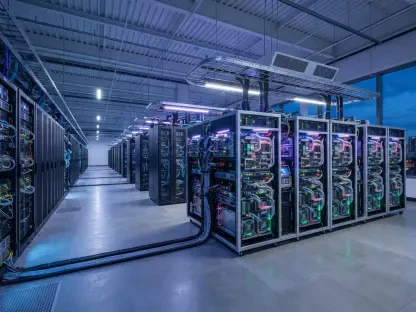

The transition to a hyperscale provider requires more than just purchasing servers; it demands a massive physical build-out of data centers capable of handling intense thermal outputs. This fundamental shift marks a departure from the days when software giants could rely solely on intellectual

Designing a robust hybrid system requires a tolerant parser to handle the format inconsistencies frequently produced by small-parameter local models. As of 2026, the transition from experimental AI hosting to production-grade deployment on edge hardware has redefined the boundaries of decentralized

The aggressive development of in-house silicon like Trainium and Graviton allows Amazon to decouple its operational costs from the high premiums of external chip manufacturers. This strategic pivot marks a significant departure from the reliance on third-party vendors that once dictated the cost

Strategic resource management now requires a shift from pure speed toward power-conscious architecture and resource-frugality across the enterprise. For nearly twenty years, the tech industry operated under the assumption that virtual resources were entirely disconnected from physical scarcity,

Competitive Shifts: The Emergence of the Specialized AI Cloud Provider The global hunger for high-performance silicon has transformed raw computational power into a currency more volatile and valuable than the traditional assets once managed by the world’s largest financial institutions. This

Environmental groups warn that fast-tracking massive data centers through specialized planning regimes could undermine local democratic oversight. As the United Kingdom accelerates its digital infrastructure rollout to support the next generation of artificial intelligence, the sheer scale of