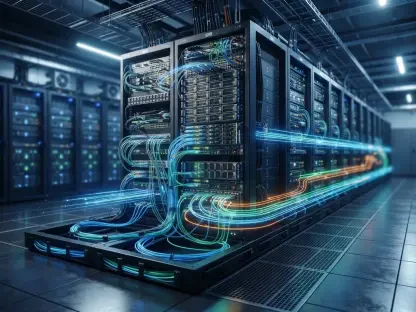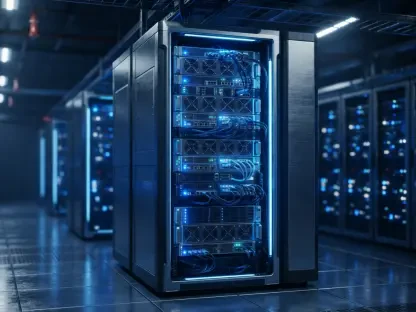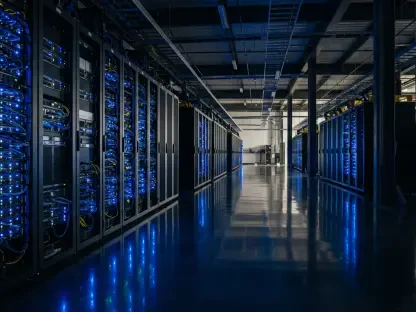

A single server rack equipped with eight specialized graphics units now costs nearly three hundred thousand dollars, illustrating the massive barrier to entry in this sector. This staggering figure represents the new reality for PowerCompute, Inc., an organization that has recently shed its
Larry Ellison’s brief ascent to the status of the world’s wealthiest person in 2025 was quickly challenged by market volatility surrounding the high costs of AI scaling. This sudden shift in fortune underscores the precarious nature of the technology sector as it navigates the transition toward
The convergence of aerospace scale and terrestrial data centers is accelerating as SpaceX secures a massive 110,000 Nvidia GPU allocation for industry leaders like Google and Anthropic. This tactical expansion marks a significant departure from the organization’s traditional focus on orbital
Modern enterprise data centers are no longer defined by the physical constraints of individual hardware racks but by the fluid and intelligent orchestration of data across software-defined landscapes. The transition from rigid hardware silos to agile, software-defined architectures has
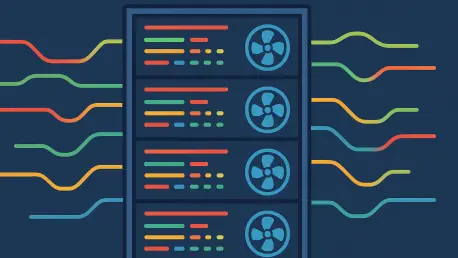
The elimination of 'dependency hell' through preconfigured CUDA environments has positioned providers like Hostinger as a bridge for developers who require both root access and ease of use. As the global landscape for artificial intelligence and machine learning undergoes a radical transformation

Modern IoT systems increasingly utilize edge computing to filter and process data locally before forwarding only the most relevant payloads to the cloud for analysis. This architectural evolution represents a departure from the early days of simple sensor arrays, signaling the rise of a