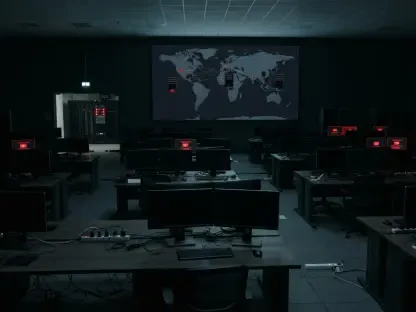

Most modern large-scale DDoS attacks originate from botnets composed of hijacked computers, servers, and IoT devices whose owners are completely unaware of the compromise. As the global digital ecosystem expands through 2026 and 2028, these distributed networks have evolved into sophisticated
The shift from training-heavy large language models to continuous high-concurrency inference workloads is fundamentally reshaping how global technology firms prioritize their hardware investments. In the current landscape of 2026, the artificial intelligence industry has moved past the initial hype

Authentication to cloud command-line interfaces has evolved toward short-lived tokens and OIDC federation to replace the security risks posed by long-lived access keys. In the current landscape of 2026, engineering teams increasingly find themselves managing workloads across diverse environments,

Future data center architectures will likely require a twenty-eight-fold decrease in carbon intensity to maintain current growth trajectories for machine learning. The exponential demand for compute power, driven by generative AI and large-scale simulation models, has placed an unprecedented strain

Despite a 45.1% growth in localized quick commerce services, the overall decline in traditional online retail continues to put pressure on the firm's total valuation. This reality has forced a profound strategic transformation, moving the entity away from its established identity as a digital

Preventive guardrails embedded directly into infrastructure-as-code pipelines can stop security drift before workloads ever reach a production environment. The rapid adoption of multi-cloud architectures has introduced a level of complexity that traditional security frameworks are often