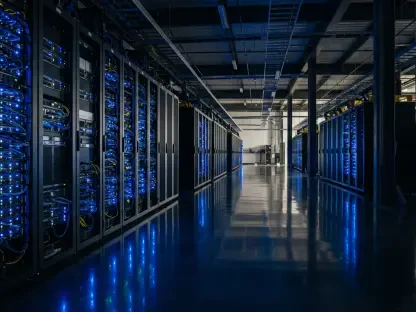

Echelon Data Centres is currently managing a massive pipeline of over 1.4GW of capacity that necessitates the adoption of high-performance liquid cooling. As artificial intelligence continues to permeate every facet of the global economy, the sheer density of compute required to train large

Regulatory requirements for data residency forced many Australian banks and healthcare providers into a sovereignty trap when Google’s dual-region Australian infrastructure failed simultaneously in July 2026. This significant network disruption, which reached its peak on July 14, represented the

Transitioning from a sprawling mesh of peering links to a managed Transit Gateway hub can drastically simplify route table management at the cost of incremental hourly attachment and data processing fees. This strategic shift represents a critical decision point for cloud architects who must

One specific breach involving a major IT services provider resulted in the exfiltration of over 1.7 million employee records providing attackers with a comprehensive blueprint of the company's hierarchy. This massive data set, currently circulating in specialized underground forums, serves as a

The recent launch of Alibaba Cloud’s third South Korean data center signals a major shift in the regional cloud landscape as the company aims to disrupt the long-standing dominance of U.S. hyperscalers. This move represents more than just a physical expansion; it is a calculated challenge to the

Organizations are discovering that the autonomous nature of agentic AI necessitates a move toward private cloud models to maintain control over sensitive data and operational expenses. The transition from reactive large language models to proactive agents capable of executing multi-step reasoning