
Maryanne Baines is a preeminent authority in cloud technology and enterprise infrastructure, with extensive experience evaluating how tech stacks integrate into diverse industrial applications. As major cloud providers tighten their bonds with AI pioneers, Maryanne offers a strategic perspective on how these massive infrastructure investments translate into real-world engineering advantages. This conversation delves into the recent launch of the Claude Platform on AWS, examining the operational efficiencies of native API access, the nuanced trade-offs of data processing boundaries, and the long-term impact of specialized hardware on model performance.
Native access to the Claude Platform is now available through existing AWS Identity and Access Management credentials. How does removing the need for separate vendor contracts change the workflow for engineering teams, and what specific efficiencies do you see in using consolidated billing and CloudTrail for audit logging?
Removing the legal and procurement friction of separate vendor contracts is a massive win for engineering velocity. When a team can use their existing AWS IAM credentials to spin up Claude without signing a new agreement or managing a separate Anthropic account, they move from the planning phase to execution in hours rather than months. The consolidated billing provides a palpable sense of relief for finance departments who only have to track a single AWS invoice, while CloudTrail offers a transparent, high-definition view of every API call for audit logging. It creates a seamless environment where security teams feel confident and developers feel unburdened by administrative overhead, allowing them to focus entirely on building.
Data processing for this platform occurs outside the standard AWS security boundary, which differs from the Amazon Bedrock model. For organizations without strict regional data residency requirements, what are the primary trade-offs when choosing this native environment over a service that operates entirely within the AWS infrastructure?
This is a critical architectural decision that hinges on the balance between native feature access and rigorous infrastructure encapsulation. While Amazon Bedrock keeps the data processor within the AWS boundary, the native Claude Platform on AWS allows data to be processed outside that boundary by Anthropic, which is a significant distinction for security compliance. For organizations that are not tethered by strict regional data residency laws, the trade-off is often worth the shift because they gain immediate access to the full, canonical Anthropic API and development environment. It feels like tapping into the raw power of the platform while still benefiting from AWS’s robust access layer and monitoring tools. You are essentially choosing a slightly different security posture in exchange for the absolute latest in AI innovation and platform-specific capabilities.
This integration includes early-access tools like Managed Agents, Python code execution, and the Model Context Protocol connector. How do these features specifically lower the technical barriers for deploying autonomous agents, and what step-by-step approach should developers take to implement prompt caching to manage latency?
These tools represent a fundamental shift from building simple AI wrappers to orchestrating truly autonomous systems. By utilizing Managed Agents and Python code execution directly in API calls, developers no longer have to build complex, brittle middleware to handle logic or external calculations. The MCP connector is particularly exciting because it links Claude to remote servers without requiring custom client code, which significantly reduces the technical debt of new integrations. To manage latency, I recommend developers first identify high-volume asynchronous workloads and then implement prompt caching for any repeated context. This method creates a noticeably snappier experience for users and brings a tangible sense of efficiency to the budget by reducing redundant processing costs.
Anthropic has committed to utilizing five gigawatts of Trainium chip capacity to train and run future AI models. What impact does this specialized hardware scale have on the performance of models like Opus 4.7, and how does such a massive infrastructure investment influence long-term service reliability for enterprises?
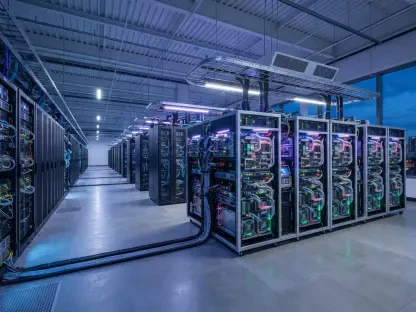
When you talk about five gigawatts of specialized Trainium chip capacity, you are describing an industrial-scale engine designed specifically for the next generation of machine intelligence. For models like Opus 4.7, Sonnet 4.6, and Haiku 4.5, this scale translates into faster training cycles and more efficient inference, which means enterprises see better performance and lower latency in production. This isn’t just a minor hardware upgrade; it’s a commitment involving more than US$100 billion in AWS technologies over the next decade to ensure that the infrastructure can handle the most demanding AI workloads. This massive investment gives enterprise leaders the peace of mind that their AI partner has the literal power and hardware longevity to support their growth for years to can, turning AI from an experimental project into a rock-solid utility.
Users can now access new API features and beta tools like the Files API and web search on the day they launch. How does this immediate feature parity affect the development cycle for companies building complex AI applications, and what practical steps ensure these new capabilities are integrated safely?
Achieving day-one feature parity is a game-changer for companies that need to stay on the bleeding edge of technology. In the past, there was often a frustrating lag between a model’s release and its availability in managed environments, which could stall a development cycle for weeks. Now, with immediate access to tools like the Files API for document referencing or web fetch for real-time information, teams can iterate at a blistering pace. To integrate these safely, developers should first test new capabilities in the Claude Console’s development environment to evaluate response quality and citation accuracy. By using the provided prompt generation and improvement tools, they can ensure that new features are grounded and reliable before pushing them to their production user base.
The Claude Console provides specific tools for prompt generation, improvement, and evaluation. Can you walk through how a development team might use these native features to refine their AI responses, and what metrics are most important when benchmarking the success of these updated prompts?
The Claude Console serves as a sophisticated laboratory where developers can move beyond simple trial-and-error. A team typically starts by using the prompt generation tool to draft initial instructions, then moves into the evaluation suite to run those prompts against a variety of complex test cases. It is an iterative, almost tactile process where you can see the model’s logic evolve in real-time as you tweak the context. When it comes to benchmarking, the most vital metrics are accuracy, latency, and cost-efficiency—especially when leveraging prompt caching for repeated contexts. Seeing a high-volume workload transition from slow, expensive calls to fast, cached responses is incredibly satisfying for any engineering lead looking to optimize their stack.
What is your forecast for the evolution of native cloud-AI partnerships?
I predict we will see a deeper, almost invisible integration where the line between the cloud provider and the AI platform vanishes entirely. We are moving toward a future where specialized hardware like the five gigawatts of Trainium capacity becomes the standard foundation for all enterprise AI, rather than a luxury reserved for early adopters. Over the next decade, as companies fulfill hundred-billion-dollar infrastructure commitments, the focus will shift from simply accessing models to creating deeply customized, autonomous agent ecosystems that live entirely within these high-performance cloud environments. It will eventually feel less like using an external tool and more like an organic extension of a company’s internal digital nervous system.