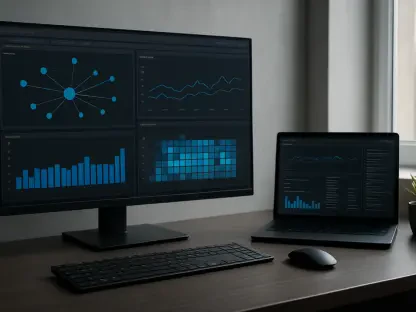

IT managers currently face a fragmented landscape where every networked AV device requires a separate, proprietary dashboard for basic monitoring. This disjointed environment stems from years of hardware-centric development where manufacturers prioritized internal ecosystems over external

Market analysis should focus less on copying existing competitors and more on identifying gaps in their positioning, pricing, or user onboarding processes. While the technical barrier to entry has lowered in 2026, the strategic barrier remains higher than ever for founders aiming to capture

BNP Paribas and Google Cloud have embarked on a five-year strategic partnership designed to accelerate the bank's digital transformation through advanced artificial intelligence. This collaboration provides the European banking leader with access to Google’s Gemini Enterprise and Gemini models,
Oracle asserts that the rise of artificial intelligence functions as a business accelerator for its software-as-a-service segment rather than acting as a disruptive threat to legacy systems. While industry skeptics often suggest that generative models could render traditional enterprise resource

Market analysts are currently monitoring the $287 resistance level as a primary indicator of whether Amazon's record-breaking valuation can sustain its upward momentum. In the summer of 2026, the company achieved a historic milestone by reaching a record-breaking stock price of $284.02, which

The Dow Jones U.S. Software Index experienced a sharp 36% decline in early 2026 as investors panicked over the potential obsolescence of traditional SaaS frameworks. This massive sell-off reflected deep-seated anxieties regarding the rise of autonomous agents and their potential to render