

Organizations can now address the growing demand for Large Language Model completions by tapping into the latent compute found in office-bound MacBook Pros and Mac minis. This development marks a significant departure from traditional reliance on centralized data centers, which have become

A decade of warnings regarding data management has failed to translate into operational success for many enterprises currently attempting to deploy sophisticated autonomous assistants. The technological industry stands at a critical juncture where the theoretical brilliance of generative AI often

The integration of eight HBM4 memory stacks provides the Maia 300 with a total capacity of 288 GB to eliminate bottlenecks during intensive inference tasks. This strategic move marks a fundamental shift in how cloud infrastructure is engineered, as the industry moves away from general-purpose
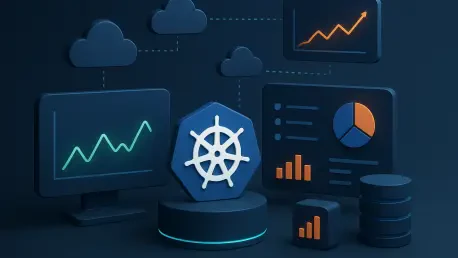
The evolution of infrastructure from resource-heavy virtual machines to ephemeral containers has made real-time system transparency a non-negotiable requirement for site reliability. This transition, which gained significant momentum around 2006 with the rise of cloud computing, fundamentally
CEO Brett Diamond has indicated that the company will prioritize the development of a unified recovery and cloud platform over new acquisitions in the coming years. This strategic shift follows a period of rapid expansion that recently culminated in the high-profile acquisition of IBM’s VMware

The transition of AI agents from experimental pilots to steady-state production workloads is signaled by the introduction of tiered pricing for the AgentCore Runtime. In the first half of October, Amazon Web Services executed a pivotal shift in its approach to Artificial Intelligence