
Organizations can now address the growing demand for Large Language Model completions by tapping into the latent compute found in office-bound MacBook Pros and Mac minis. This development marks a significant departure from traditional reliance on centralized data centers, which have become

A decade of warnings regarding data management has failed to translate into operational success for many enterprises currently attempting to deploy sophisticated autonomous assistants. The technological industry stands at a critical juncture where the theoretical brilliance of generative AI often

The integration of eight HBM4 memory stacks provides the Maia 300 with a total capacity of 288 GB to eliminate bottlenecks during intensive inference tasks. This strategic move marks a fundamental shift in how cloud infrastructure is engineered, as the industry moves away from general-purpose
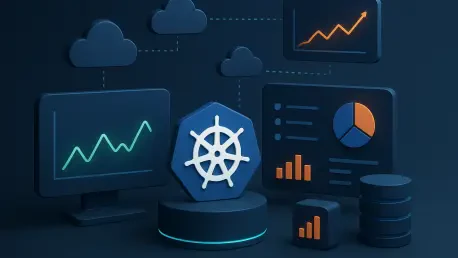
The evolution of infrastructure from resource-heavy virtual machines to ephemeral containers has made real-time system transparency a non-negotiable requirement for site reliability. This transition, which gained significant momentum around 2006 with the rise of cloud computing, fundamentally

The sudden consolidation of the serverless ecosystem reached a fever pitch this week as the industry processed the implications of a massive infrastructure realignment. The Deno runtime is scheduled to enter a maintenance-only phase, receiving only security updates and critical bug fixes until its
CEO Brett Diamond has indicated that the company will prioritize the development of a unified recovery and cloud platform over new acquisitions in the coming years. This strategic shift follows a period of rapid expansion that recently culminated in the high-profile acquisition of IBM’s VMware